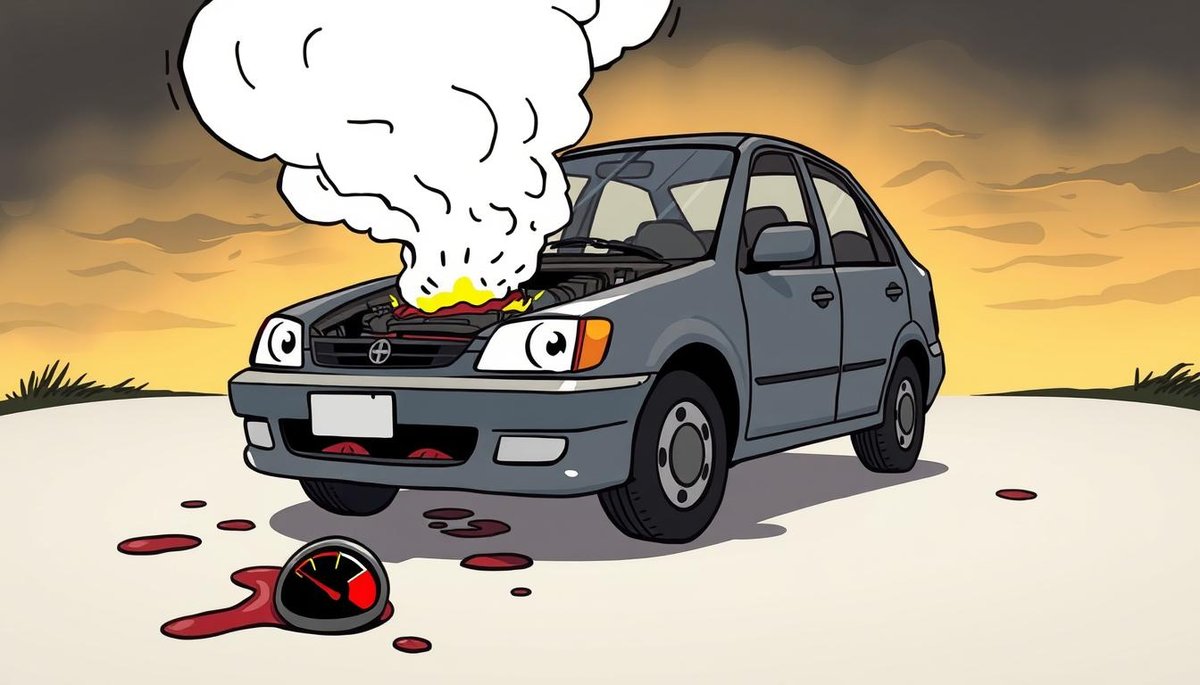
A moment of distraction at the gas pump can turn into a day-ruining, wallet-emptying nightmare. We've all been there: rushing, thinking about a million other things, and then the sinking feeling hits – "Did I just put the wrong gas in my car?" The truth is, the impact of using the wrong fuel grade or even the wrong type of fuel can range from a minor hiccup to catastrophic engine damage.
It's a surprisingly common mistake, with consequences that vary wildly depending on what went wrong. Understanding these differences isn't just about saving yourself a headache; it's about protecting one of your most valuable investments.
At a Glance: What Happens When You Fuel Up Wrong
- Wrong Octane (e.g., Regular in a Premium car): Your engine's computer will usually adjust to prevent damage, but you'll experience reduced performance and fuel economy. Repeated use can lead to long-term issues.
- Wrong Octane (e.g., Premium in a Regular car): Generally harmless, sometimes a slight performance dip. It's often just a waste of money.
- Gasoline in a Diesel Engine: Extremely destructive. Gasoline strips crucial lubrication, leading to catastrophic failure of the fuel pump and injectors. Requires extensive, expensive repairs.
- Diesel in a Gasoline Engine: The engine will run roughly, then stall. Diesel won't ignite properly in a gasoline engine. Requires a system drain, filter, and potentially injector/catalytic converter replacement.
- E85 in a Non-Flex-Fuel Vehicle: Can cause rough running and trigger the check engine light. Often manageable by topping off with regular gas if caught early.
- Stale or Contaminated Fuel: Causes clogs, misfires, and corrosion. Leads to fuel system issues and potential component failure.
- Key Takeaway: If you suspect a major fuel mix-up (gasoline/diesel), DO NOT start your engine and call for a tow immediately.
The Octane Riddle: When Numbers Matter (or Don't)
Octane isn't about fuel "power" or "purity." It's a measure of a fuel's resistance to premature ignition, often called "pre-ignition" or "engine knock." Think of it like this: a higher octane fuel can withstand more compression before igniting, which is crucial for high-performance engines designed with higher compression ratios or forced induction (turbochargers, superchargers).
Most gas pumps in the U.S. offer three grades: regular (87 octane), mid-grade (89 octane), and premium (91 or 93 octane). Your car's manufacturer designs its engine to run optimally on a specific octane level.
Under-Octaning: The Perils of Putting Regular in a Premium-Demanding Engine
Let's say your owner's manual explicitly calls for 91 or 93 octane, but you mistakenly fill up with 87. What happens?
Modern vehicles are remarkably intelligent. Their Electronic Control Units (ECUs) are equipped with knock sensors that listen for the telltale pinging sound of pre-ignition. When detected, the ECU immediately "retards" the ignition timing – it delays the spark – to prevent damage to vital internal components like pistons and valves.
This protective measure works, but it comes at a cost. Retarded timing means:
- Reduced Performance: You'll notice a significant drop in horsepower and acceleration. Your car will feel sluggish.
- Diminished Fuel Economy: The engine isn't operating at its most efficient, meaning more trips to the pump.
- Potential Long-Term Strain: While a one-time error might not cause lasting harm, repeated use of lower octane fuel in an engine designed for premium can put undue stress on components over time, potentially leading to expensive repairs down the line.
The Rule of Thumb: Always consult your owner's manual. If it recommends premium, you might get away with regular occasionally, but expect reduced performance. If it requires premium, don't skimp.
Over-Octaning: Is More Always Better? (Spoiler: Not for Your Wallet)
What if you're driving a car designed for 87 octane, and you decide to treat it to a tank of 91 or 93 premium gas? Many people believe higher octane equals better performance or a cleaner engine, but this is a common misconception.
For an engine designed for regular gas, its ECU isn't programmed to take advantage of the higher octane fuel's resistance to pre-ignition. It simply won't adjust ignition timing in a way that provides a benefit. In fact:
- No Performance Gain: You won't get more horsepower or better acceleration.
- Potential Slight Performance Loss: In some cases, the engine might even run slightly less efficiently, as the fuel may not burn as completely under the lower compression ratios it was designed for.
- A Waste of Money: Premium fuel almost always costs more. If your car doesn't need it, you're literally pouring money down the drain.
So, when it comes to higher octane in a regular engine, it's generally harmless, but also completely unnecessary. If you're wondering is premium gas right for you? the definitive answer always lies in your car's owner's manual, not marketing hype.
The Catastrophic Crossover: Mixing Fuel Types
This is where fueling errors escalate from performance compromises to potential engine destruction. Accidentally putting diesel into a gasoline engine, or vice versa, is arguably the most severe fueling mistake you can make. The fundamental differences between these two fuel types mean they cannot coexist in the wrong system without dire consequences.
Gasoline in a Diesel Engine: A Lubrication Nightmare
This is arguably the worst-case scenario. Diesel fuel is not just a combustible liquid; it's also a lubricant. The high-pressure fuel pumps and injectors in modern common-rail diesel engines operate at incredibly tight tolerances and immense pressures—often exceeding 30,000 pounds per square inch (psi). They rely on diesel fuel's inherent lubricity to prevent metal-on-metal friction.
Gasoline, by contrast, is a much thinner, less viscous substance. When introduced into a diesel system:
- It Acts as a Solvent: Gasoline strips away the vital lubricating film that diesel provides.
- Metal-on-Metal Contact: This leads to immediate and severe wear within the high-pressure fuel pump and injectors.
- "Swarf" Production: The friction generates microscopic metal shavings, known as swarf, which circulate throughout the entire fuel system.
- Catastrophic Failure: Even a small percentage (as little as 1-2%) of gasoline contamination can cause the high-pressure pump to seize and injectors to fail. This is not a slow decline; it's often sudden and comprehensive.
The Repair Bill: If gasoline has entered a diesel engine's fuel system, you're typically looking at the replacement of the entire fuel delivery system: the fuel tank, fuel lines, high-pressure fuel pump, all fuel injectors, and potentially even the fuel rail and emissions control components. This can easily run into thousands, if not tens of thousands, of dollars.
Diesel in a Gasoline Engine: A Sluggish, Fouling Mess
While often less immediately catastrophic than gasoline in a diesel, putting diesel into a gasoline engine still causes significant problems.
Gasoline engines use spark plugs to ignite a finely atomized air-fuel mixture under relatively low compression. Diesel fuel, however, is:
- Denser and Less Volatile: It doesn't vaporize or atomize effectively under the conditions of a gasoline engine.
- Difficult to Ignite: Its higher flash point means it won't ignite properly with a spark plug under low compression.
What you'll typically experience: - Rough Running, Then Stalling: The engine might run on any residual gasoline in the fuel lines for a short time, sputtering and running very roughly, before stalling completely and refusing to restart.
- Fouled Components: Diesel quickly clogs the fuel filter and fouls the spark plugs, making ignition impossible. Fuel injectors will also become coated and clogged.
- Catalytic Converter Damage: Incomplete combustion can send unburnt fuel into the catalytic converter, potentially overheating and damaging this expensive emissions component.
The Repair Bill: Repair for diesel in a gasoline engine usually involves completely draining the fuel tank, flushing all fuel lines, replacing the fuel filter, and potentially cleaning or replacing fouled spark plugs and fuel injectors. If the catalytic converter is damaged, that's another costly replacement. While not as universally devastating as the diesel-gasoline mix-up, it's still a significant and avoidable expense.
The Ethanol Enigma: E85 in Non-Flex-Fuel Vehicles
E85 is a blend of up to 85% ethanol and 15% gasoline. It's a "flex fuel" designed for specific vehicles—Flex-Fuel Vehicles (FFVs)—that have components built to withstand the corrosive properties of high ethanol content.
If your vehicle is not an FFV and you accidentally put E85 in the tank:
- Initial Symptoms: Your engine might run roughly, experience misfires, and the "check engine" light will likely illuminate. Ethanol's high oxygen content can also confuse the engine's oxygen sensors.
- Material Compatibility: The higher ethanol content can degrade fuel lines, seals, and other components in non-FFVs over time, as these materials aren't designed to be compatible.
What to Do: - If You Catch It Immediately (at the pump): Don't start the car. If you've already started fueling, stop immediately and top off the tank with as much regular gasoline as possible. The dilution will help.
- If You Realize Later (while driving): Drive gently and periodically top off your tank with regular gasoline to dilute the E85. The check engine light should eventually turn off as the E85 is diluted and burned off.
A one-time E85 mishap in a non-FFV typically doesn't cause long-term damage if managed promptly through dilution. Repeated use, however, will accelerate wear on incompatible components.
Beyond the Pump: Fuel Quality Matters Too
Even if you pick the right octane and fuel type, issues with the fuel itself can cause significant problems for your engine.
The Problem of Stale Fuel
Gasoline isn't designed to last forever. If left unused for several months (think classic cars in storage, lawnmowers, or even a vehicle sitting idle during a long vacation), it chemically breaks down.
- Varnish Formation: As gasoline degrades, it leaves behind sticky, shellac-like residues.
- Clogged Components: This varnish can clog fuel injectors, coat carburetor components, and build up on fuel pump parts.
- Fuel Pump Strain: The fuel pump has to work harder to push fuel through these obstructions, leading to premature wear, overheating, and potential pump failure.
- Poor Performance: Clogged injectors result in an improper fuel spray pattern, leading to misfires, rough idling, reduced power, and decreased fuel economy.
Always use fresh fuel, especially in equipment that sits for extended periods. Fuel stabilizers can help mitigate degradation during storage.
The Threat of Contamination: Water or Dirt
Fuel quality can be compromised by external factors.
- Water Contamination: Water can enter your fuel tank through faulty seals at the gas station, condensation in your own tank, or even poorly maintained fuel storage tanks at the station. In ethanol-blended gasoline (commonplace today), water can cause "phase separation." Ethanol, being hygroscopic (water-attracting), will bond with water and separate from the petroleum, sinking to the bottom of your fuel tank.
- Impact: Your fuel pump will then suck up this water-heavy mixture, leading to severe misfires, rough idling, stalling, and potentially complete engine shutdown. Water also promotes rust and corrosion throughout your fuel system, including the fuel filter, lines, and injectors.
- Dirt/Particulate Contamination: Fine dirt, rust particles, or other debris can get into your fuel tank if fuel filters at the pump are old, or if your own fuel cap is damaged.
- Impact: These particulates can clog your fuel filter, eventually leading to fuel starvation. More dangerously, they can pass through a compromised filter and damage sensitive fuel injectors, leading to poor performance or complete failure.
Good fuel hygiene—using reputable gas stations and ensuring your fuel cap seals properly—is the best defense against contamination.
Act Fast, Save Thousands: Your Immediate Action Plan
Mistakes happen. But how you react to a fueling error can be the difference between a minor inconvenience and a five-figure repair bill. This is absolutely critical:
- DO NOT turn the ignition key. This is the single most important step. Turning the key even to the accessory position, or attempting to start the engine, activates the fuel pump. This pump will immediately begin circulating the contaminated fuel throughout your entire fuel system, vastly increasing the scope of damage and repair costs.
- If the engine was started or the vehicle was driven: Shut off the engine immediately. Do not attempt to restart it.
- DO NOT drive the vehicle any further. Even a few yards can cause significant damage, especially with a gasoline/diesel mix-up.
- Move the vehicle to a safe spot: If you're at the pump, put the vehicle in neutral and manually push it away from the island to a safe parking spot.
- Call for a tow: Have the vehicle towed to a professional service center. Explain precisely what type of fuel you put in and the amount.
- Professional Remediation: A qualified technician will need to:
- Completely drain the fuel tank.
- Thoroughly flush the entire fuel system (lines, fuel rail, and potentially injectors) with clean, correct fuel to remove all traces of the contaminant.
- Replace the fuel filter (a must in any fuel mix-up).
- Inspect other components for damage, especially in diesel engines where the high-pressure pump and injectors may need replacement.
Attempting to "burn off" the wrong fuel or repeatedly trying to start the engine will only force more of the damaging fuel through the system, dramatically increasing your repair bill.
Protecting Your Ride: Prevention and Awareness
Preventing fuel mix-ups boils down to a few simple habits:
- Consult Your Owner's Manual: This is your definitive guide for the correct fuel type and octane rating. Keep it handy or know where to find the information quickly.
- Pay Attention at the Pump: Before you even insert the nozzle, take a moment to look at the grade and type. Modern diesel nozzles are often larger than gasoline nozzles, which can physically prevent diesel from entering a gasoline car's fuel tank, but not always the other way around.
- Avoid Distractions: Put your phone away, finish your conversation, and focus solely on the task of fueling your vehicle.
- Know Your Fuel: Understand the difference between gasoline and diesel, and whether your vehicle is a Flex-Fuel Vehicle capable of handling E85.
While modern vehicles are incredibly resilient, they're not foolproof. A simple mistake at the pump can lead to severe engine damage and a hefty repair bill. Understanding the specific impact of using the wrong fuel grade, or the wrong type of fuel, empowers you to react correctly and protect your vehicle. A little attention now can save you a lot of heartache and money down the road.