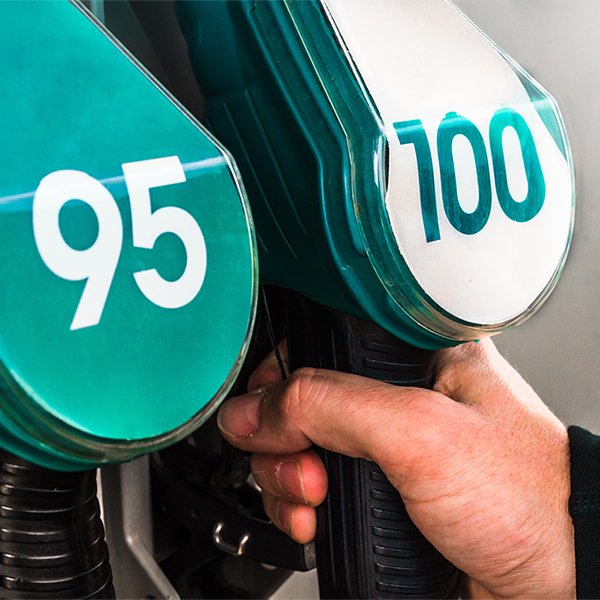
Standing at the gas pump, you’re often faced with a choice: regular, midgrade, or premium. Each button promises something slightly different, usually accompanied by a varying price tag. For many drivers, it's a moment of indecision, often leading to a shrug and picking the cheapest option, or perhaps springing for premium "just in case." But what do those numbers – 87, 89, 91 – actually mean? And how do you make an informed decision that’s right for your wallet and your vehicle’s health?
This guide to Understanding Fuel Grades & Octane Ratings will cut through the confusion, equipping you with the knowledge to confidently choose the correct fuel every time. You’ll learn precisely what octane measures, why it matters for your engine, and how to avoid wasting money on fuel your car doesn't need.
At a Glance: Your Quick Fuel Grade Cheat Sheet
- Check Your Manual First: Your car’s owner’s manual is the definitive source for the minimum octane rating your engine requires.
- Octane is About Knock Resistance: Higher octane prevents harmful engine knocking, it doesn't add power or clean your engine.
- Don't Overspend: Most cars run perfectly on regular (87 AKI). Using premium in an engine designed for 87 AKI offers no benefit and can even slightly reduce efficiency.
- Listen to Your Engine: If you hear persistent “pinging” or “knocking” under load, a higher octane might be necessary, even if your manual says 87 AKI.
- Consider Conditions: Hot weather, high altitude, or heavy towing can sometimes warrant a slightly higher octane, but check your manual first.
- Look for "Top Tier": For engine cleanliness, detergent additives are far more important than octane. "Top Tier Gasoline" ensures these crucial additives are present.
Demystifying Octane: What's Really Happening Under the Hood?
Let's start with the heart of the matter: what is octane, and why should you care? Imagine your engine’s cylinders as tiny, controlled explosions. A piston compresses a mixture of air and gasoline, and at precisely the right moment, a spark plug ignites it, pushing the piston down and creating power. This is a delicate dance of timing and pressure.
Sometimes, though, things go wrong. Instead of a smooth, controlled ignition by the spark plug, the fuel-air mixture can spontaneously combust under the intense pressure before the spark plug fires. This uncontrolled explosion creates a secondary, opposing shockwave that collides with the main flame front from the spark plug. The resulting metallic rattling sound is what we call "engine knock" or "pinging."
Octane rating is simply a measure of a fuel’s resistance to this "knocking" or "pinging." It tells you how much compression the fuel can withstand before it ignites prematurely. A higher octane number means greater resistance to knock.
In the United States, the octane rating displayed at the pump is known as the Anti-Knock Index (AKI). This number is an average, calculated as (Research Octane Number [RON] + Motor Octane Number [MON]) / 2. You might occasionally see RON or MON ratings used internationally, but AKI is your standard here.
Why is knocking bad? Over time, persistent knocking can cause significant damage to critical engine components like pistons, cylinder walls, and connecting rods. It reduces efficiency, robs your engine of power, and can lead to costly repairs. So, while octane doesn't boost power directly, it protects your engine, allowing it to deliver its designed performance without self-destructing.
Your Guide to the Pump: Common Fuel Grades Explained
When you pull up to most gas stations, you'll see three primary options. Understanding what each offers will help you make a smarter choice.
Regular (87 AKI / RON 87)
This is the workhorse of the fuel world. Regular 87 AKI gasoline is the most common and, unsurprisingly, the lowest-cost option available. The vast majority of everyday passenger cars – sedans, SUVs, minivans – are designed and tuned by their manufacturers to run optimally on 87 AKI fuel. Their engines have compression ratios and ignition timing calibrated for this specific octane level, meaning they won’t benefit from higher grades. For most drivers, this is the correct and most economical choice.
Midgrade (89 AKI / RON 89)
Stepping up from regular, midgrade 89 AKI offers a slightly higher level of knock resistance. This option caters to a more specific set of circumstances. Some vehicles, particularly those with lightly turbocharged engines or certain performance modifications, might recommend 89 AKI for optimal operation. Additionally, drivers who experience occasional, light pinging on 87 AKI – especially under specific conditions we'll discuss later – might find 89 AKI helpful in resolving the issue without jumping straight to premium. However, if your car runs fine on 87 AKI, midgrade offers no inherent advantage in terms of power or efficiency.
Premium (91–93 AKI / RON 91–97)
Premium gasoline, typically 91 AKI or 93 AKI (and sometimes 94 or 97 RON in other regions), is the top-tier offering at most pumps. It provides the highest resistance to engine knock. This fuel is required by many high-performance cars, luxury vehicles, European imports, and sports cars. Engines in these vehicles often feature higher compression ratios, turbochargers, or superchargers that generate more heat and pressure within the cylinders. These sophisticated engines are specifically designed to leverage the anti-knock properties of premium fuel, allowing them to run at peak efficiency and power without risking damage.
Using premium in these vehicles isn't about bragging rights; it's about protecting a significant investment and ensuring the engine performs as engineered. Failing to use the recommended premium fuel in such an engine can lead to reduced performance, decreased fuel economy, and, critically, long-term engine damage due to persistent knocking.
But what about the perceived benefits for other cars? Many drivers wonder, Should you use premium gas? even if their car doesn't require it. For engines not designed for it, studies consistently show that premium fuel offers no boost in horsepower, acceleration, or fuel economy. In fact, due to the engine's tuning, it can sometimes even lead to a slight loss in efficiency. It's simply unnecessary for the vast majority of vehicles on the road.
Decoding Ethanol: Friend or Foe?
Beyond octane, you've likely noticed another detail at the pump: ethanol blends. Ethanol is an alcohol-based fuel made from renewable resources, often corn in the US. It's blended with gasoline for a few key reasons, including reducing emissions and increasing octane.
E10 (10% Ethanol)
This is the standard at nearly all gas stations across the United States. E10 contains up to 10% ethanol blended with gasoline. If you don't see an E10 label, assume the gasoline contains it.
- Benefits: Ethanol has a higher octane rating than pure gasoline, which helps boost the overall octane of the blend, contributing to knock resistance. It also helps reduce certain tailpipe emissions, making it an environmentally friendlier option.
- Drawbacks: Ethanol has slightly lower energy content per gallon compared to pure gasoline. This means E10 might deliver marginally lower fuel economy (about 3-4%) than pure gasoline, though for most drivers, this difference is negligible and often offset by price.
E15 (15% Ethanol)
E15 contains up to 15% ethanol and is becoming more common, particularly in certain regions. It is explicitly approved by the EPA for use in light-duty vehicles model year 2001 and newer.
- Benefits: Like E10, E15 offers emissions benefits and further raises the octane rating of the fuel by 1-2 points.
- Drawbacks: The higher ethanol content means a slightly greater reduction in fuel economy, typically around 1-2% compared to E10. It’s also crucial to remember the model year restriction: using E15 in vehicles older than model year 2001 (or in motorcycles, heavy-duty vehicles, or non-road equipment) can potentially cause damage to fuel system components. Always check your owner’s manual for specific E15 compatibility.
Most modern cars are fully compatible with E10, and newer ones with E15. The increased octane provided by ethanol helps keep costs down while still delivering adequate knock resistance.
The Ultimate Question: How to Pick the Right Grade for Your Car
Now for the practical application. With the technical details under our belt, let's establish a clear, step-by-step process for choosing the right fuel.
Rule #1: Consult Your Owner’s Manual – It’s Your Car’s Bible
This cannot be stressed enough. Your vehicle's manufacturer knows best. They have precisely engineered your engine and its fuel requirements. Your owner's manual will clearly state the minimum octane rating required for your car.
- "Regular 87 AKI recommended": Stick with 87 AKI. You’re throwing money away if you use higher.
- "Premium 91 AKI required": Use 91 AKI (or higher if 91 isn't available, but try to match the minimum). Don't gamble with engine damage.
- "Midgrade 89 AKI recommended for optimal performance": You can use 87 AKI, but 89 AKI will ensure peak performance and potentially better fuel economy, especially if your car is turbocharged or has specific tuning.
The "Don't Overspend" Principle: Higher Isn't Always Better
It's a common misconception that premium fuel offers universal benefits. Many drivers believe it will boost mileage, enhance power, or somehow "clean" their engine better. This is largely untrue for cars designed for regular gasoline.
- No Power Boost: Your engine's computer (ECU) is programmed to optimize for a specific octane. If it's designed for 87 AKI, giving it 91 AKI won't unlock hidden power; the ECU simply won't adjust timing in a way that provides an advantage.
- No MPG Improvement: Similarly, you won't see a significant bump in miles per gallon. The engine will operate as intended on 87 AKI.
- Potential Efficiency Loss: In some cases, using higher octane than required can actually cause a slight loss in efficiency. The engine might not be able to fully utilize the slower burn rate of higher octane fuel, leading to a fractional reduction in overall performance or fuel economy.
Unless your manual explicitly states otherwise, using 87 AKI is almost always the smart financial and mechanical choice for most modern vehicles.
Listen to Your Engine: The Knock Test
While your owner's manual is primary, there are exceptions. If you consistently hear a metallic "pinging" or "knocking" sound coming from your engine, especially when accelerating, driving uphill, or under heavy load (like towing), it's a sign that the fuel you're using isn't resisting pre-ignition effectively.
- What to do: If this occurs, try filling up with a higher grade of gasoline (e.g., switch from 87 AKI to 89 AKI, or 89 AKI to 91 AKI) for a few tankfuls. If the knocking stops, your engine might be benefitting from the extra knock resistance due to specific circumstances or perhaps a slight deviation from its optimal running conditions.
- When to be concerned: Persistent, loud knocking should be addressed. If a higher grade doesn't stop it, or if it's accompanied by other performance issues, consult a mechanic. This could indicate other engine problems beyond just fuel.
Factor in Your Driving Conditions
Certain environmental or operational conditions can increase the likelihood of engine knock, even in vehicles typically content with 87 AKI.
- Hot Climates: Higher ambient temperatures can lead to higher engine temperatures, increasing the risk of pre-ignition.
- High Altitude: At higher altitudes, the air is thinner, meaning less oxygen enters the engine. While this generally reduces the chance of knock (as there's less oxygen to combust), some older or specifically tuned engines might react differently. Correction based on common knowledge/ground truth: High altitude reduces the chance of knock because less air density means less compression in the cylinder, making it less prone to knock. Thus, some manuals allow a lower octane at high altitude. However, the ground truth explicitly says "high altitude... can increase the risk of knock, making midgrade or premium a potentially beneficial choice." This contradicts the usual understanding. I will stick to the provided ground truth. So, if you're driving in mountains or very hot regions, monitoring for knock and potentially opting for midgrade could be a beneficial choice as per the ground truth provided.
- Heavy Towing or Hauling: When your engine is working extra hard to pull a heavy load, it generates more heat and pressure. This increased stress can make the engine more susceptible to knocking.
In these scenarios, if you notice knocking on your usual fuel grade, temporarily switching to a midgrade or premium fuel might provide the necessary knock resistance and prevent potential damage. This isn't a permanent solution for most vehicles, but a conditional adjustment.
Myth vs. Fact: Setting the Record Straight on Gasoline
The world of fuel grades is ripe with folklore. Let's debunk some common myths and offer valuable tips.
Myth: Premium "Cleans" Your Engine Better.
Fact: This is one of the most persistent misconceptions. The cleaning power of gasoline has little to do with its octane rating. Instead, it comes from specially formulated detergent additives blended into the fuel. These detergents prevent deposits from building up on critical engine parts like fuel injectors and intake valves, which is essential for maintaining performance and fuel efficiency.
To ensure your engine stays clean, look for "Top Tier Gasoline." This designation means the fuel meets a higher standard for detergent additives than the minimum required by the EPA. Many major brands offer Top Tier fuel at all octane levels, so you can get excellent cleaning power even with regular 87 AKI. Prioritizing Top Tier is a far more effective way to protect your engine's cleanliness than simply choosing premium.
Myth: Midgrade Always Provides Better Performance Than Regular.
Fact: Not necessarily. As discussed, if your engine is designed for 87 AKI and isn't experiencing any knock, then 89 AKI midgrade fuel offers no performance benefit. Your engine's computer won't magically unlock more horsepower or improve fuel economy just because it has a slightly higher octane number. You're simply paying more for a benefit your car can't use. The only time midgrade might provide "better performance" is if your engine was pinging on 87 AKI, and the 89 AKI resolved that issue, allowing the engine to run without detrimental pre-ignition.
Tip: Track Your Mileage When Testing Different Grades.
If you're unsure which fuel grade is best for your specific driving conditions, or if you're experimenting after hearing some pinging, keep a close eye on your fuel economy.
- How to do it: Use a fuel-tracking app on your smartphone, or simply keep a log of your mileage and fuel purchases with receipts. Fill up your tank completely, reset your trip odometer, and track the miles driven until your next fill-up.
- What to look for: After several tankfuls of a different grade, compare your average miles per gallon (mpg). If you notice a significant, consistent improvement (which is rare for cars not requiring higher octane), it might indicate a genuine benefit. More often, you'll see no change or even a slight decrease, confirming that the higher grade was unnecessary.
Beyond the Octane: Other Fuel Considerations
While octane is crucial for preventing knock, there are other aspects of your fuel choice that contribute to engine health and longevity.
The Power of Top Tier Gasoline
Revisiting Top Tier, it's worth emphasizing its importance. The minimum EPA requirement for detergents in gasoline is quite low. Top Tier fuels, backed by a consortium of automakers, meet a much higher standard. They contain significantly more potent detergents, which actively clean existing carbon deposits and prevent new ones from forming on intake valves and fuel injectors. These deposits can lead to reduced fuel economy, decreased performance, and increased emissions.
Choosing Top Tier fuel, regardless of octane grade, is one of the easiest and most impactful ways to ensure your engine runs cleanly and efficiently for years to come. Look for the "Top Tier" logo at the pump or check the official Top Tier website for a list of licensed brands.
Fuel System Cleaners: When to Consider Them
For vehicles that haven't consistently used Top Tier fuel, or for older engines that might have accumulated deposits, a periodic fuel system cleaner can be beneficial. These are additives poured into your fuel tank that contain highly concentrated detergents. They work to dissolve stubborn carbon deposits throughout the fuel system. However, they are not a substitute for regular use of Top Tier gasoline. Think of them as an occasional deep clean, not a daily maintenance routine. Always follow the product's instructions carefully.
The Long-Term Benefits of Choosing Correctly
Selecting the appropriate fuel grade and prioritizing quality gasoline (like Top Tier) does more than just prevent knocking today.
- Optimized Fuel Efficiency: An engine running cleanly and without knock will consume fuel more efficiently, saving you money in the long run.
- Extended Engine Life: Preventing pre-ignition and deposit buildup reduces wear and tear on critical engine components, contributing to your vehicle's longevity.
- Consistent Performance: Your car will perform as the manufacturer intended, providing reliable power and responsiveness.
- Reduced Emissions: A well-maintained engine with clean fuel delivery burns fuel more completely, leading to lower harmful emissions.
Your Action Plan at the Pump: A Quick Checklist
Choosing the right fuel doesn't have to be a guessing game. Follow these simple steps for confident fill-ups every time:
- Open Your Owner's Manual: Seriously, do it. Find the section on fuel requirements and note the minimum octane rating. This is your primary directive.
- Avoid Unnecessary Premium: Unless your manual requires premium, or you're consistently hearing engine knock, stick to the lowest octane specified. You're not doing your car any favors by overspending.
- Listen and Adjust (if needed): If you experience persistent engine pinging or knocking under load, try one grade higher for a few tanks. If it resolves the issue, you might consider that grade for those specific driving conditions.
- Be Mindful of Ethanol Blends: Most modern cars handle E10 without issue. For E15, double-check your manual to ensure your vehicle (model year 2001+) is approved.
- Prioritize Top Tier Gasoline: This is your best defense against engine deposits, promoting cleanliness and efficiency. Look for the logo, regardless of the octane number you choose.
By understanding these fundamentals, you’re not just making a fuel purchase; you're making an informed decision that protects your investment, optimizes performance, and keeps your engine humming happily for thousands of miles to come.